
Phages: important helpers for humans and the environment
Bacteriophages – phages for short – are highly specialised viruses that can specifically destroy certain bacteria.
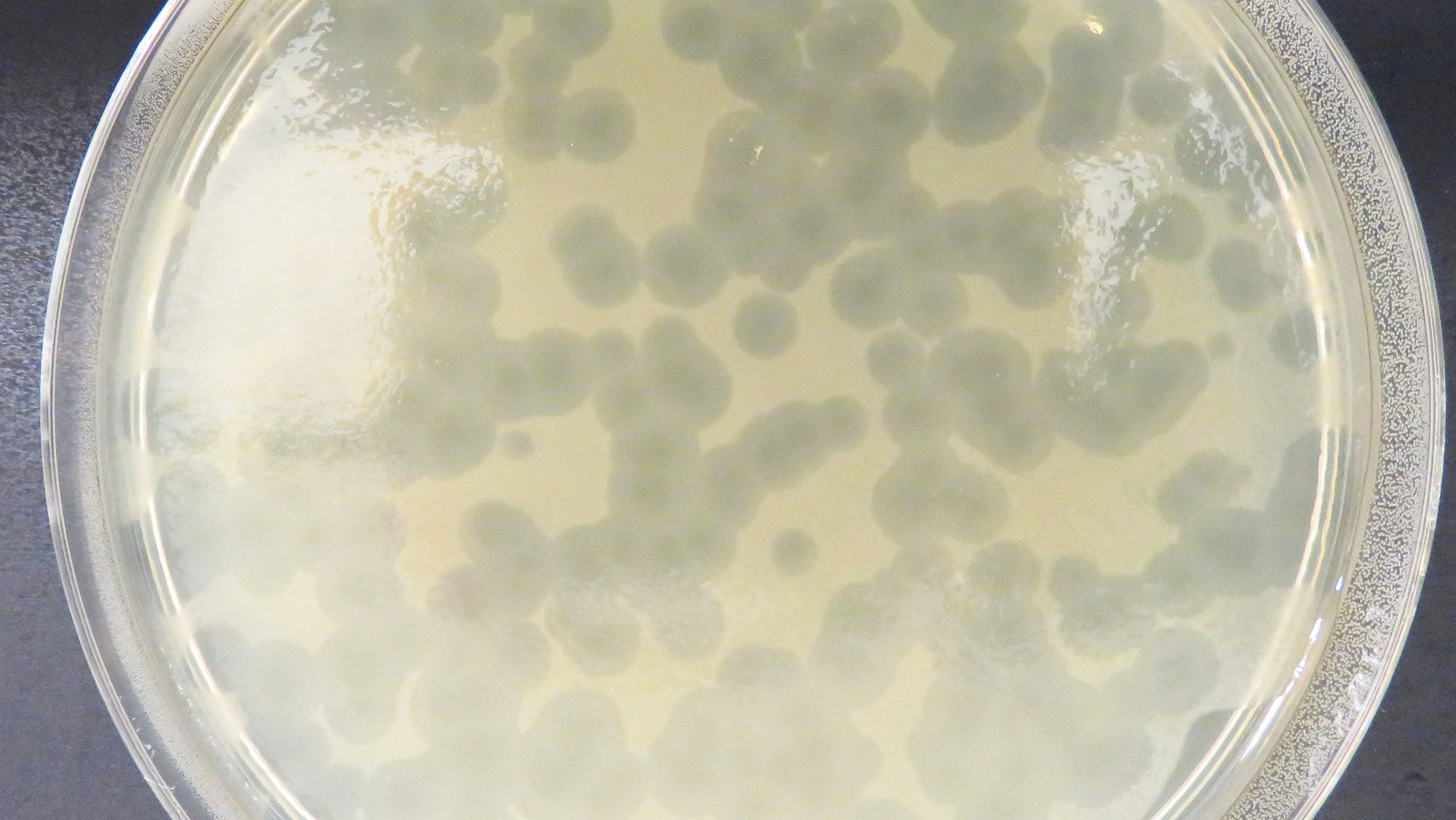
In times of growing antibiotic resistance, they are experiencing a renaissance in medical research and therapy worldwide: they can treat infections where today's antibiotics fail.
But their potential extends far beyond human medicine. Phages are also gaining importance for environmental applications – for example, for microbial process stabilisation in sewage treatment plants, for hygiene monitoring or for the targeted control of problem germs in biofilms. Our institute is already involved in research projects on phage-based hygiene monitoring.
Discovering and isolating phages
Despite their potential, phage research is still in its infancy in many areas. One of the main problems is that only a small proportion of the phages present in the environment have been discovered so far. Isolating them from complex matrices such as water, soil or sludge is technically challenging. In most cases, it is necessary to cultivate the bacteria to be treated in the laboratory, which is often more difficult for environmental germs than for many medically relevant bacteria. The diversity of phages also hinders the application of cultivation-independent detection methods. However, through targeted methodological optimisations, it is often still possible to obtain suitable phages for specific tasks.
Phages are underestimated key players in microbiology. Their discovery, description and application could enable the future of sustainable bacterial control in healthcare and technical environmental protection.