Development of a recycling concept for reversibly operated fuel cells
Start of the joint project PreFuCell
Reversible solid oxide fuel cells (r-SOC systems) are among the most promising technologies in the context of the sustainable energy transition.
These systems can be used in different operating modes depending on the current supply and demand situation in the electricity grid. The flexible operating modes make it possible to provide electrical energy during bottlenecks and to store surplus electricity in times of overproduction in the form of chemical energy carriers using power-to-gas. In this way, r-SOC systems perform an important function as long-term storage, especially during periods of low wind and low sunlight.
Advantages of r-SOC technology
The main technological advantages of r-SOC technology lie in its comparatively high efficiency, the possibility of using different gases (e.g. hydrogen, natural gas, biogas) in fuel cell operation, and the integration of renewable energies by converting surplus energy from solar and wind farms into storable chemical fuels. These can be used again at a later point in time, for example when there is low feed-in from renewable sources, to generate electricity.
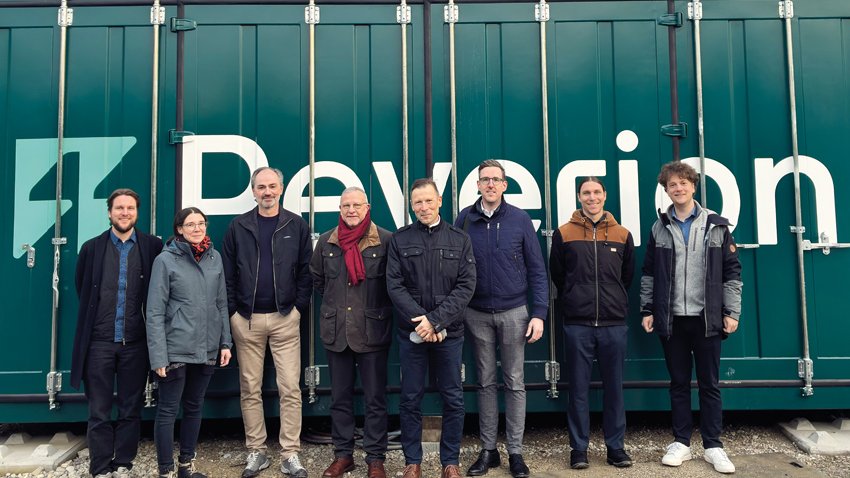
Reverion GmbH is a spin-off of the Technical University of Munich and was founded in 2022. Based in Eresing (Landsberg am Lech district), the company develops highly efficient, reversible small power plants based on r-SOC.
PReFuCell joint project
As part of the three-year PReFuCell joint project, the four project partners Reverion, Technical University of Munich (Chair of Energy Systems), smk and bifa are working to further increase the efficiency and cost-effectiveness of r-SOC technology. In addition, in line with the principles of a circular economy, a life cycle assessment is being conducted to determine whether r-SOC systems can act as CO₂ sinks when biogenic feedstocks are used, thereby enabling negative emissions.
The recycling of raw materials at the end of a plant‘s service life is of central importance for the implementation of a circular economy. In the PReFuCell project, bifa is therefore taking on tasks in the circular economy work package. In particular, bifa is analysing the recyclability of r-SOC stacks and their peripherals at the end of their service life and, as part of a feasibility study, is developing a recycling process for the improved integration of r-SOC systems into the circular economy. In the process, new recycling options are being identified, evaluated and prepared for transfer into practice. Further focus is placed on evaluating the resulting material flows in the context of product and waste law. The newly developed recycling concept is supplemented by a comprehensive life cycle assessment.
The Federal Ministry for Economic Affairs and Energy is funding the PReFuCell joint project with a total of 4.861 million euros.
Funding code: 03EN5054C