MaKoSaTex
From research to the Bavarian Circular Economy Strategy
How can the collection of used textiles in Bavaria be safeguarded when collection volumes are rising, the quality of used textiles is falling, and established recycling channels are coming under economic pressure? The bifa Environmental Institute, in collaboration with Augsburg University of Applied Sciences (THA), is addressing these questions as part of the MaKoSaTex project.
The project is being carried out on behalf of the Bavarian State Ministry for the Environment and Consumer Protection (StMUV). Since our first report in ‘bifa aktuell’, the project has made significant progress – and has been incorporated into the draft Bavarian Circular Economy Strategy (BayKWS).
MaKoSaTex in the BayKWS
In the catalogue of measures within the draft BayKWS strategy, MaKoSaTex is listed as a specific measure under the ‘Textiles and Clothing’ priority area. This underlines the project’s significance for the further development of the textile circular economy in Bavaria. Application-oriented research can therefore make a direct contribution to ensuring that policy strategies are based on a sound technical foundation, whilst simultaneously driving forward solutions for local authority practice.
Developing sustainable solutions for end-of-life textiles together
The project focuses on public waste management authorities (örE), which face growing challenges: falling revenues from the marketing of end-of-life textiles are coupled with rising sorting and disposal costs. At the same time, the planned implementation in Germany of the European requirements on extended producer responsibility (EPR) raises questions about future funding and the distribution of roles. MaKoSaTex is therefore examining collection structures, market and material flow trends, as well as national and international EPR models.
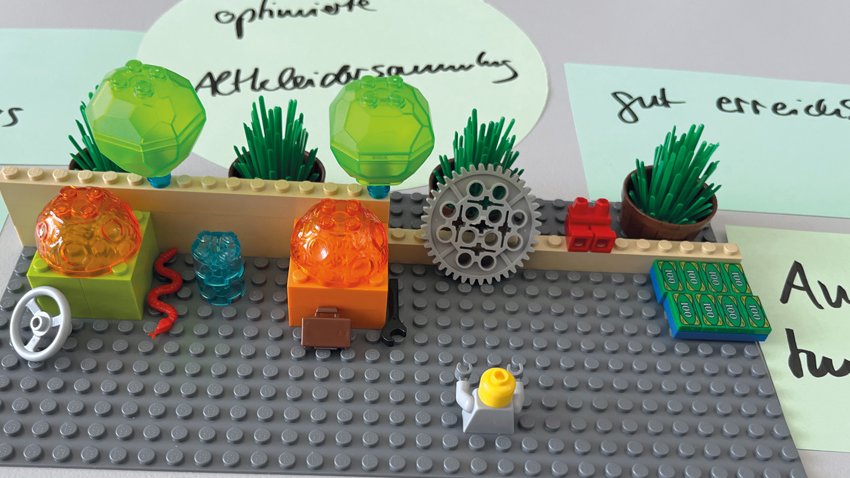
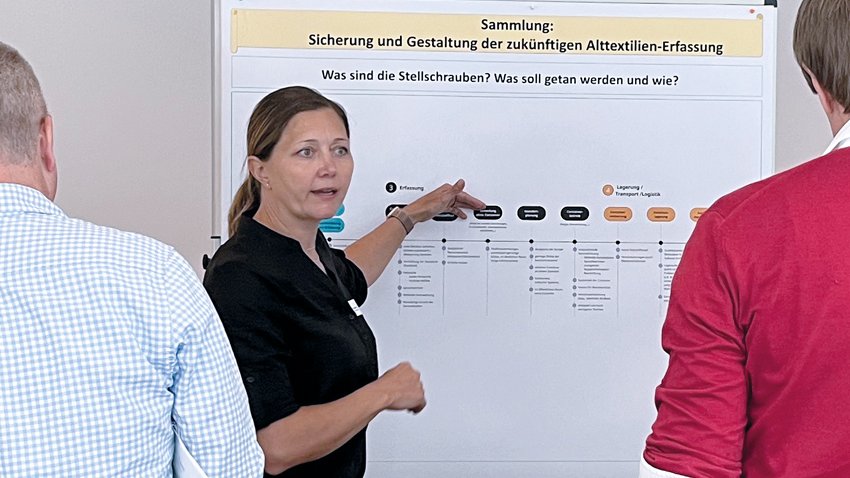
Direct dialogue with practitioners is particularly important. Representatives from local authorities and the textile value chain came together in two dialogue workshops in May and July 2026. Discussions focused on approaches to safeguarding collection, improving public information, and developing sustainable sorting and recovery models. In a scenario workshop, initial models for solutions that can be implemented in the short term were developed based on these discussions.
The next steps will involve consolidating the findings and translating them into concrete recommendations for action for local authorities and the Free State of Bavaria. This will also involve examining greenhouse gas savings across various scenarios for the future collection and recovery of end-of-life textiles. The aim remains clear: a collection system for end-of-life textiles that functions under difficult market conditions, enables high-quality reuse and recovery, and offers local authorities a reliable outlook.