Reclassification of copper under ATP 22
Implications for the HP 14 assessment of waste

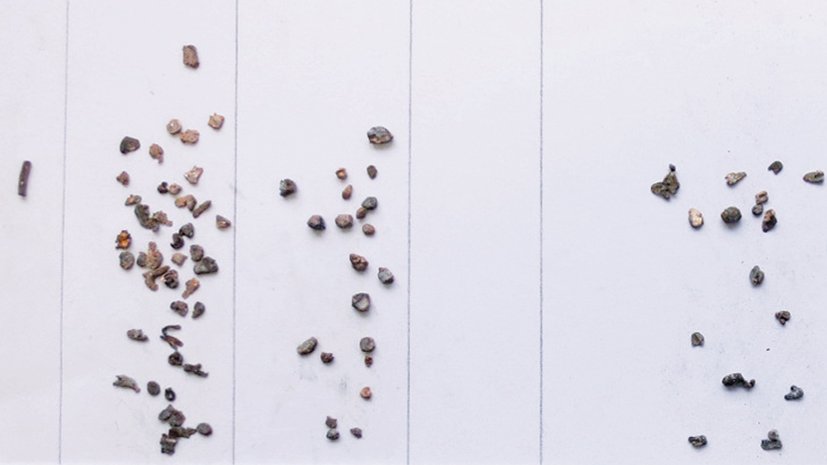
Since May 2026, ATP 22 – an amendment to the CLP Regulation – has been mandatory and has a direct impact on the classification of copper-containing waste with regard to HP 14. Fine-particle metallic copper is now classified as acutely and chronically toxic to aquatic life, Category 1 (H400 and H410, respectively). The decisive factor here is a specific surface area of > 0.67 mm²/mg, which distinguishes it from its solid form.
This surface area criterion is virtually impossible to implement in waste management practice. For waste and mixtures of unknown composition, there is no practicable routine method for determining the mass fraction of copper particles with a specific surface area > 0.67 mm²/mg. In accordance with the precautionary principle, the total content of metallic copper would therefore have to be taken into account in cases of doubt. This could result in numerous copper-containing wastes having to be classified as hazardous solely on the basis of the precautionary principle – with significant consequences for authorisations, storage, transport, disposal and, in particular, the recovery of these wastes.
ATP 22 also replaces the previously used and comparatively straightforward particle size criterion with the specific surface area criterion. Whilst a particle size limit of 1 mm was previously used to distinguish between solid and finely divided forms, a surface area limit of 0.67 mm²/mg now applies to copper.
Assessment of aquatic toxicity and approaches to a risk assessment suitable for enforcement
However, a re-evaluation of the data used by ECHA shows that this criterion significantly overestimates the chronic aquatic toxicity of spherical copper particles with diameters greater than 0.33 mm. Although the threshold of 0.67 mm²/mg is based on the previous 1-mm convention, it does not take sufficient account of the actual relationship between specific surface area and aquatic toxicity.
Against this background, a risk assessment is proposed that is based on the ECJ’s ‘Mirror Entry’ judgement of 28 March 2019. Under this approach, proportions of metallic copper that are reliably present in solid form could be excluded, and the remaining proportion assessed on the basis of its probable aquatic effect. This would enable a proper classification without underestimating aquatic toxicity or systematically overestimating it on the basis of the precautionary principle.
Furthermore, the problems associated with ATP 22 highlight that future amendments to the CLP Regulation must take greater account of practical enforceability. Owing to the close connections with waste, transport, and major-accident legislation, amendments to the CLP Regulation can have significant implications for downstream areas of law and the circular economy.