
Residual waste sorting analyses
Knowing what’s in the bin
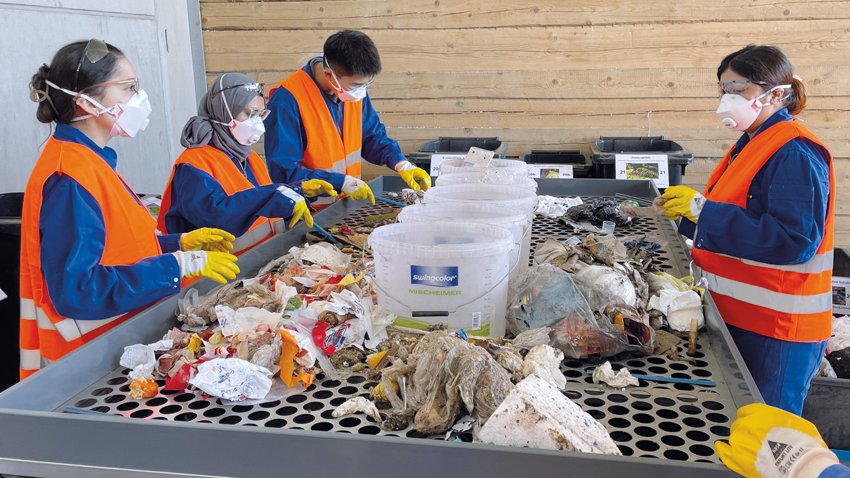
What ends up in residual waste shows how well separate collection and waste advice are working – and where there is potential for climate and resource protection. Residual waste sorting analyses provide a data basis for this.
This issue is particularly topical in Baden-Württemberg
The 2024 Waste Management Plan provides for household waste to be analysed every five years from 2025 onwards. By 2030, the quantities of bio-waste and recyclables in household waste are to be halved. With baseline figures of less than 50 and 20 kilograms respectively, the target values are a maximum of 25 kilograms of bio-waste and 10 kilograms of recyclables per inhabitant per year.
The LUBW guidelines for the analysis of residual waste establish a standardised methodology
The waste is sieved, sorted by hand and recorded. Organic matter such as kitchen and garden waste, food scraps and packaged food is identified, as are paper, plastics, glass, metals, composites, electrical appliances, textiles and hazardous substances. Results are reported as a percentage by weight and in kilograms per inhabitant per year. The plan involves at least two campaigns independent of the season, different settlement structures and 48 sampling units.
This reveals which materials are being lost to recycling and where action can be taken, for example in waste advisory services, collection systems, and bin and fee structures. Repeat analyses show whether measures are effective.
bifa supports public waste management authorities, from planning representative sampling through sampling and sorting to statistical analysis and recommendations for action. In this way, a look inside the bin provides a sound basis for sustainable decisions.