MaKoSaTex – Local authority strategies for sustainable used textile collection
As part of the MaKoSaTex project, the bifa Environmental Institute is working with Augsburg University of Applied Sciences (THA) to develop specific recommendations for Bavarian local authorities on the collection and recycling of used textiles.
The project is being carried out on behalf of the Bavarian State Ministry for the Environment and Consumer Protection (StMUV) and forms part of the Bavarian Circular Economy Strategy (BayKWS).
It has been prompted by a far-reaching change in the market and the system
The textile industry is one of the most environmentally damaging sectors worldwide. High resource consumption – particularly of water – and the use of environmentally harmful substances make the transition to a circular textile economy urgently necessary. Although consumer interest in sustainably produced textiles is growing, this has so far been reflected only to a limited extent in actual consumption behaviour.
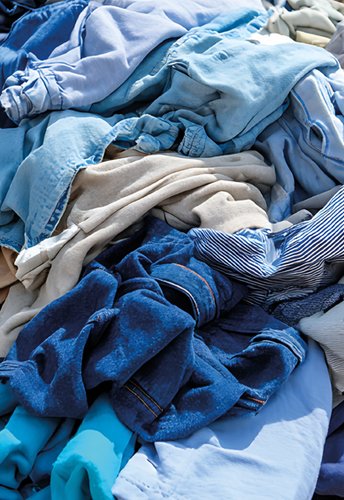
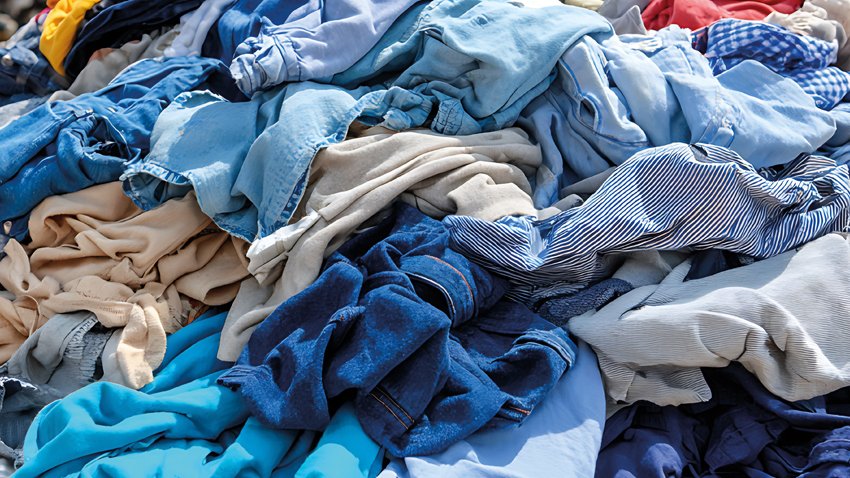
The volume of clothing waste is growing continuously, primarily due to changing consumption habits and the continuing prevalence of ‘fast fashion’. Clothes are being replaced more frequently, worn for shorter periods and often manufactured to a lower standard. Since 2000, global fibre production has doubled; in 2024, around 120 million tonnes of used clothing were generated. Around 80 per cent of this is landfilled or incinerated, only 12 per cent is reused and less than 1 per cent is recycled into new textile fibres.
Germany and Bavaria have an established collection system for used textiles, with a collection rate of around 64 per cent and a reuse or recovery rate of over 90 per cent. The collected textiles are sorted and either reused as second-hand clothing or recycled into products such as cleaning cloths, insulation materials and, to a limited extent, new textile fibres.
The system is based on collaboration between public waste management authorities, charitable organisations and private companies. Despite this structure having been successful to date, the used textile cycle faces major challenges. In particular, the consequences of fast fashion and falling revenues from used textiles are jeopardising the economic viability of collection and recovery, as already evidenced by the insolvencies of several companies in the sector. Two legislative initiatives are currently the focus of particular attention:
- The obligation to collect used textiles separately, effective from 1 January 2025 (amendment to the Circular Economy Act).
- The extended producer responsibility (EPR) for textiles, adopted by the European Parliament on 9 September 2025
Whilst the separate collection of used textiles in Germany has long been regarded as a model of success, fast fashion, declining quality and rising volumes are increasingly leading to economic and technical challenges. Since 1 January 2025, public waste management authorities (örE) have been obliged to collect used textiles separately across the board. The planned introduction of extended producer responsibility (EPR) further increases the strategic pressure to act.
MaKoSaTex is therefore systematically analysing the current situation in Bavaria: the challenges facing public waste management authorities, market and material flow trends, and national and international EPR models. This analysis is based on a survey of all Bavarian public waste management authorities and interviews with stakeholders in the textile value chain. In this way, key problem areas are identified – ranging from quality losses and a lack of recycling capacity to financing risks and issues of public acceptance.
Building on this, practical and economically viable measures are being developed through a facilitated dialogue process involving local authorities and practitioners. In addition, the environmental benefits – particularly in terms of greenhouse gas and resource savings – are being assessed. The aim is to establish a sustainable municipal waste textile collection scheme in Bavaria.
---------------------------------------------------------------------------------------------------- ------------------------
Funding reference: BAF01SoFo-85453
Funding body: Bavarian State Ministry for the Environment and Consumer Protection
Funding priority: Development of concrete measures to address the current challenges faced by Bavarian local authorities in the collection and recycling of used textiles (MaKoSaTex textile study)
Project duration: 1 January 2026 to 31 December 2026
-----------------------------------------------------------------------